
Studying medicine in China in 2026: real fees, scholarships and how to check recognition
First-year university charges at 23 Chinese medical universities, the scholarships we found, and four official checks for recognition in India, Pakistan and the United States.
By the SAS editorial team · · 7 min read
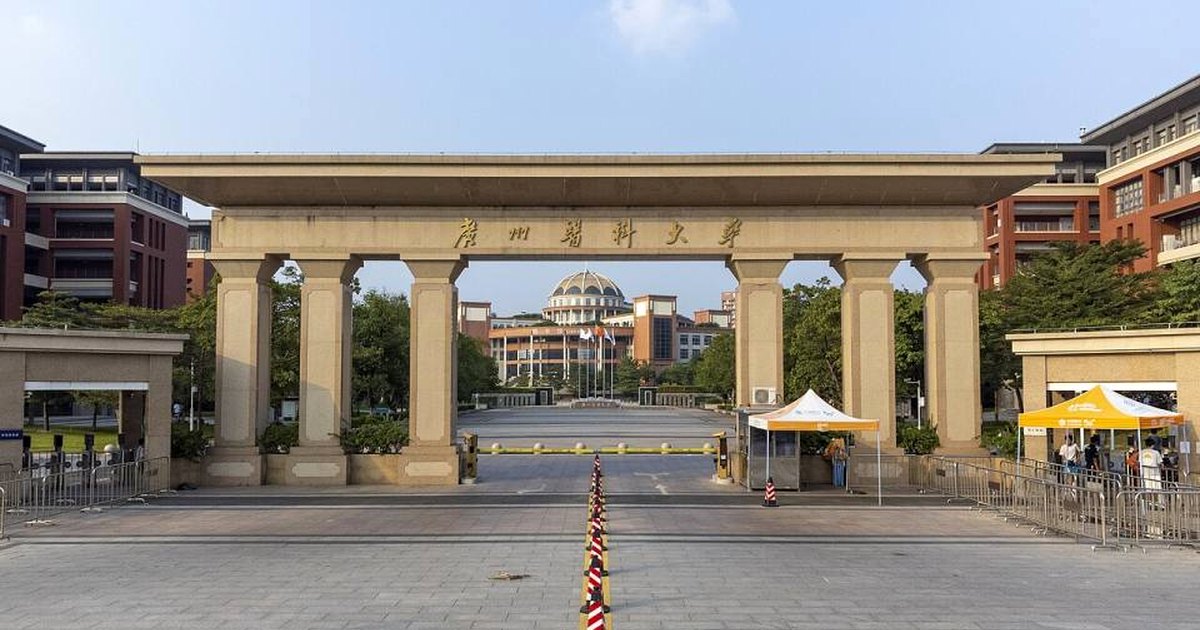
Medicine in China is one of the most searched study-abroad subjects, and also one of the most confusing: agents quote very different prices, and nearly everyone tells you the degree is "recognised". This guide shows what the universities themselves charge for the first year, which scholarships we found, and how to check recognition yourself from official sources, so that you can ask better questions before you pay a deposit.
Last checked: 25 October 2026. The fees below were read on each university's own 2026 pages and are the figures recorded on the university pages of this site. Fees change every year and some universities publish only a starting price, so always confirm on the university page linked beside each row.
What the universities charge in the first year
On SAS we list a university in the medical section only if it has a published fee structure and a scholarship for international students that applies to the English-taught medicine programme. Of the 27 universities listed on SAS today, 23 are in China. For those 23, the first-year charges set by the university or the government (tuition, hostel and other university charges, but not optional items, refundable deposits or any agency charge) range from CNY 33,640 to CNY 75,000, with a middle figure of about CNY 41,500. "From" means the university publishes a starting price only.
| University | Place | First-year university charges | Scholarships found |
|---|---|---|---|
| Anhui Medical University | Hefei, China | CNY 36,200 | 2 |
| Capital Medical University | Beijing, China | CNY 58,300 (from) | 1 |
| Chongqing Medical University | Chongqing, China | CNY 35,600 | 2 |
| Dalian Medical University | Dalian, China | CNY 54,350 | 1 |
| Fudan University | Shanghai, China | CNY 75,000 | 2 |
| Guangxi Medical University | Nanning, China | CNY 43,600 | 1 |
| Guangzhou Medical University | Guangzhou, China | CNY 44,000 | 1 |
| Hebei Medical University | Shijiazhuang, China | CNY 40,800 | 2 |
| Jiangsu University | Zhenjiang, China | CNY 41,450 | 3 |
| Jinan University | Guangzhou, China | CNY 41,475 | 1 |
| Kunming Medical University | Kunming, China | CNY 39,600 | 3 |
| Nanjing Medical University | Nanjing, China | CNY 41,100 | 6 |
| Shandong University | Jinan, China | CNY 45,800 | 2 |
| Shantou University Medical College | Shantou, China | CNY 43,515 | 1 |
| Southern Medical University | Guangzhou, China | CNY 55,800 | 3 |
| Southwest Medical University | Luzhou, China | CNY 33,640 | 3 |
| Wenzhou Medical University | Wenzhou, China | CNY 38,800 | 3 |
| Wuhan University | Wuhan, China | CNY 51,800 (from) | 1 |
| Xi'an Jiaotong University | Xi'an, China | CNY 48,400 | 4 |
| Xiamen University | Xiamen, China | CNY 39,500 | 2 |
| Xinjiang Medical University | Urumqi, China | CNY 34,800 (from) | 5 |
| Xuzhou Medical University | Xuzhou, China | CNY 39,600 | 5 |
| Zhejiang University | Hangzhou, China | CNY 43,600 | 3 |
| Humanitas University | Pieve Emanuele (Milan), Italy | EUR 23,206 | 1 |
| Mohammed Bin Rashid University of Medicine and Health Sciences (MBRU) | Dubai, United Arab Emirates | AED 170,050 | 2 |
| RCSI University of Medicine and Health Sciences (Royal College of Surgeons in Ireland) | Dublin, Ireland | EUR 62,135 | 1 |
| University of Lancashire (School of Medicine and Dentistry) | Preston, United Kingdom | GBP 64,950 | 1 |
The four universities outside China (in Ireland, the United Kingdom, the United Arab Emirates and Italy) are listed in their own currencies and are far more expensive. Open any university page to see the line-by-line fees, the scholarships with their sources, the entry requirements and the date we read each page.
Read the quote you are given
- Ask for the university's own fee sheet. The sheet should be on the university's website or come directly from its international office.
- Be careful with "management" or "service" charges. A charge paid to an agent is not a university fee, and it is not shown on the university's own sheet. We do not add such charges to the totals above.
- Separate what is refundable. Deposits and optional extras (for example a single room instead of a shared one) should be listed apart from the compulsory fees.
- Scholarships rarely cover everything. Many are a fixed amount per year or a first-year award. Compare the amount with the first-year total before you count on it.
Is the degree recognised? Four questions to ask
"Recognised" depends on where you want to practise. There is no single stamp that makes a degree valid everywhere. Check these four things with official bodies.
1. Is the programme officially allowed to enrol international students?
China's Ministry of Education rules say an English-taught medical programme for international students lasts six years, including a one-year internship of at least 48 weeks, and that a university not on the ministry's approved list may not enrol English-taught international medical students (interim provisions, 2007). The most recent official list we could find is the ministry's notice for 2023-24, which named 44 universities and 3,048 places and forbids enrolling international students through a disguised "bilingual" route. We did not find newer lists, so ask the university to show you its current approval.
2. India: what the National Medical Commission requires
For Indian citizens, the Foreign Medical Graduate Licentiate Regulations 2021 require a course of at least 54 months in English, plus a 12-month internship in the same foreign institution, with the whole course and internship done in one foreign country and completed within ten years. After that, a graduate must pass the screening test and do a supervised 12-month internship in India before permanent registration. NEET is required for Indian citizens who go abroad for a primary medical qualification (NMC information page).
- The screening test is still the FMGE: the exam body NBEMS holds it on 31 October 2026 and says it will run it three times a year from now on; the pass mark is 150 out of 300 (NBEMS bulletin). The National Exit Test that was meant to replace it was deferred by an NMC notice of 13 July 2023, and we found no later official date.
- The NMC says it does not endorse any list of foreign universities and does not process individual equivalence applications. Any "NMC-approved university" label is not an official NMC list.
3. Pakistan: what PMDC requires
The Pakistan Medical and Dental Council calls its licensing exam for foreign graduates the National Registration Examination (NRE); passing it is needed for full registration (PM&DC Act 2022, section 18). Its notices in October 2025 and July 2026 say that only graduates of foreign institutions recognised by ECFMG can appear in the NRE, and that no exemption or relaxation will be given. A notice of 5 October 2026 exempts the MDCAT as a requirement for going abroad. We also saw an undated PMDC alert that seems to say the opposite, so confirm the MDCAT rule with PMDC before you decide.
4. The United States and the "ECFMG recognised" label: what it really means
You will often hear that "from 2024 only WFME-accredited schools are accepted". That is not how it turned out. ECFMG's own notices say its accreditation policy only reports which schools meet it, for information, and that it does not change an individual's eligibility (notice of 22 December 2023). What matters is whether the school has an ECFMG Sponsor Note in its World Directory record (ECFMG). A school accredited by an agency that WFME recognises and a graduation year of 2024 or later are required only on one route, Pathway 3 (ECFMG pathways). WFME recognises China's accrediting agency until June 2030 (WFME).
The World Directory is not a recognition list
The World Directory of Medical Schools lists more than 4,000 schools. Its search page says plainly that being listed does not mean recognition, accreditation or endorsement. Use it to look at a school's record, in particular the Sponsor Notes tab, but do not treat "listed in WDOMS" as proof that a degree will be accepted where you want to work.
A short checklist before you pay anything
- Is the programme on the Chinese Ministry of Education's current list for English-taught medicine, and is the course six years including the internship?
- Does the course meet your home regulator's rules: 54 months plus a 12-month internship in the same institution for India; ECFMG recognition for the Pakistani NRE?
- Do you have the university's own fee sheet, with refundable deposits and optional items shown apart?
- Which scholarship applies to your nationality and level, and what is the amount per year?
- Did you write to the regulator you depend on (NMC, PMDC, your health ministry) and keep the reply?
See the universities and scholarships on SAS
Every university in the table above has its own page with fees, profile, scholarships and sources: browse the universities, or read our China study guide. If you would like someone to go through your own list, book a free consultation. We can explain the official pages, but we cannot guarantee admission, a scholarship, or that a regulator will accept a degree: that is decided by the university, the funder and the regulator.
Sources
- China, Ministry of Education: interim provisions (2007); 2023-24 notice
- India, National Medical Commission: FMGL 2021; equivalence; NBEMS FMGE bulletin
- Pakistan Medical and Dental Council: Act 2022 and the public notices linked above
- ECFMG: Sponsor Notes, guidance on school selection; WFME; WDOMS
- University fees and scholarships: each university's own pages, linked from its page on SAS.
This article is general information, not legal or medical-career advice. Rules change; check the regulator you depend on before you commit.


