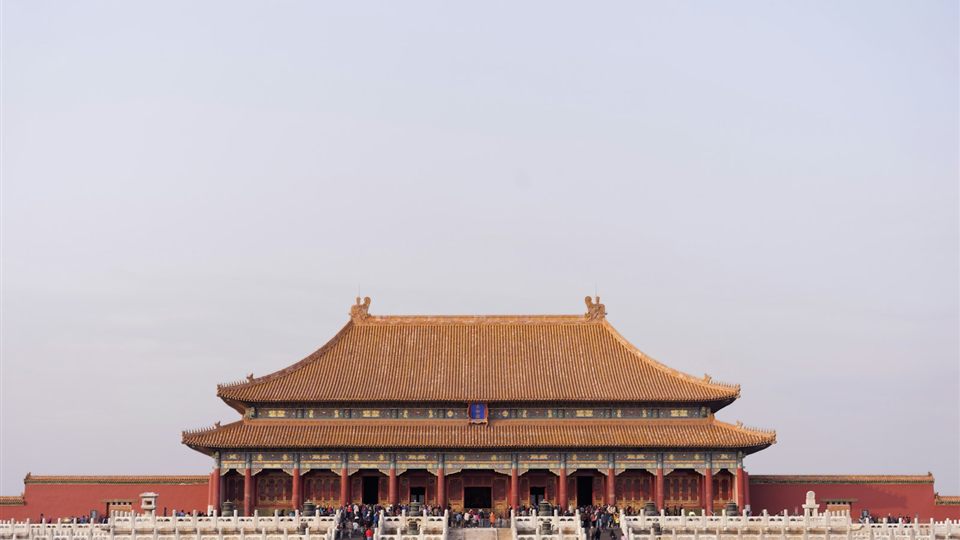
2026 intake · 2026-2027 academic year Fully funded

UNESCO/People's Republic of China (The Great Wall) Co-Sponsored Fellowships

The UNESCO/People's Republic of China (Great Wall) Co-Sponsored Fellowships are paid for jointly by the Government of China and UNESCO. For 2026-2027 there are 75 fellowships in total, of which 27 are open to new candidates from 135 invited developing Member States. Fellows study at selected Chinese universities, either as a one-year visiting scholar or for a master's or doctoral degree of 2 to 5 years, in English or Chinese depending on the programme. Candidates cannot apply to UNESCO directly: they apply through the National Commission for UNESCO of their country.

At a glance

Funder
UNESCO and the Chinese government
Where
China
Degree levels
Master's, PhD / Doctorate, Diploma / Certificate
Funding
Fully funded

UNESCO/People's Republic of China (The Great Wall) Co-Sponsored Fellowships is a fully funded scholarship offered by UNESCO and the Chinese government for study in China at Master's, PhD / Doctorate and Diploma / Certificate level. Open to students from Albania, Algeria, Argentina, Bangladesh, Brazil, Colombia, Egypt and Ethiopia and 127 more countries. SAS last checked this call against the official source on 14 November 2026.

Study in China: costs and guidance More scholarships in chinaMore master's scholarshipsMore phd scholarshipsMore diploma and certificate scholarshipsMore fully funded scholarshipsMore scholarships for bangladeshi studentsMore scholarships for egyptian studentsMore scholarships for ethiopian studentsMore scholarships for ghanaian studentsMore scholarships for indian studentsMore scholarships for indonesian studentsMore scholarships for kenyan studentsMore scholarships for nepali studentsMore scholarships for nigerian studentsMore scholarships for filipino studentsMore scholarships for sri lankan studentsMore scholarships for tanzanian studentsMore scholarships for ugandan studentsMore scholarships for vietnamese studentsMore scholarships for zimbabwean studentsOpen to Pakistani students: more scholarships

Application timeline

  1. Applications open

    Call for 2026-2027 fellowships: Not announced yet

    Published as: “The UNESCO page gives no opening date. It says candidates must register online in the Chinese Government Scholarship Information System before applying to their National Commission.”

  2. Application deadline

    23 January 2026 · Closing time not confirmed

    Published as: “Candidates submit to their National Commission by 23 January 2026; National Commissions nominate to UNESCO by 10 February 2026; no notification by 15 August 2026 means unsuccessful. No time or time zone stated.”

  3. Interviews and tests

    National preselection / university selection: Not announced yet

    Published as: “Candidates are preselected by their National Commission. Selection is then made by the Chinese universities and approved by the Chinese authorities and UNESCO. No interview or test date is given.”

  4. Final results

    Notification cut-off: 15 August 2026

    Published as: “Successful candidates receive an official award letter from UNESCO. Candidates who do not receive notification from UNESCO by 15 August 2026 should assume their application was unsuccessful.”

  5. Deadline to submit to National Commission

    23 January 2026

    Published as: “Applicants submit to their National Commission no later than Friday, 23 January 2026.”

  6. Deadline for National Commissions to nominate to UNESCO

    10 February 2026

    Published as: “National Commissions submit nominations by Tuesday, 10 February 2026.”

Where the source does not state a time we show the date only and do not assume an hour. "Not announced yet" means the source gives no date. Dates can change: ask us for the latest.

Universities and programmes

Fellowships are tenable at a selected number of Chinese universities. The guidelines name none and point to the China Scholarship Council website for the list of universities and fields. The selection is made by the Chinese universities concerned and approved by the Chinese authorities and UNESCO.

Degrees and programmes offered

Master's degree of 2 to 5 years (duration stated jointly with doctoral study), full-time at a selected Chinese university, taught in English or Chinese. Entry: bachelor's degree, under 35. Chinese-taught programmes need HSK Level 4; English-taught need English proficiency. Living allowance CNY 3,000 per month.

Doctoral degree of 2 to 5 years (duration stated jointly with master's), full-time at a selected Chinese university, taught in English or Chinese. Entry: master's degree, under 40. Chinese-taught programmes need HSK Level 4; English-taught need English proficiency. Living allowance CNY 3,500 per month.

One-year non-degree Visiting Scholar programme, in two forms: General Visiting Scholar (under 45, senior secondary diploma) and Senior Visiting Scholar (under 50, master's degree or associate professor or above). Research with periodic guidance from an assigned supervisor. Chinese-taught programmes need HSK Level 3. Living allowance CNY 3,000 per month (general) or CNY 3,500 per month (senior). Study plan of at least 500 words.

Fellowships cover study at undergraduate and postgraduate level in education, culture, communication, science and technology (general wording of the guidelines), but bachelor's degree study is not available; a General Visiting Scholar needs only a senior secondary diploma and studies for one year without a degree. Programmes are taught in English or Chinese depending on what each selected university offers. The guidelines send candidates to the China Scholarship Council university list for the available fields; that list could not be read.

Funding

The Chinese Government gives a tuition waiver, a monthly living allowance, on-campus accommodation or an accommodation subsidy, and comprehensive medical insurance. UNESCO adds international travel to and from China at the start and end of the fellowship, a monthly pocket allowance of USD 80 and a termination allowance for excess luggage on return. No allowance is paid for a spouse or dependants, and neither side pays for passport or visa costs. Visiting scholars study for one year; degree students study for 2 to 5 years as the programme requires. The 2026-2027 academic year ends on 15 July 2027.

Funding components
BenefitCoverageLimits and conditions
Tuition Covered Tuition waiver for the programme the fellow is enrolled in (Government of China) Applies within the framework of the fellowship programme.
Living allowance Covered CNY 3,000 per month for General Visiting Scholars and master's students; CNY 3,500 per month for Senior Visiting Scholars and doctoral students (Government of China) Meant to cover meals and other living expenses.
Accommodation Covered On-campus dormitory (usually a twin-room dormitory) or an accommodation subsidy (Government of China) Fellows required to live on campus get the dormitory; those not required to live on campus get the subsidy. No lodging allowance for a spouse or dependants.
Insurance Covered Comprehensive Medical Insurance and Protection Scheme for International Students in China (Government of China) Fellows pay medical expenses below the insurance rebate threshold themselves.
Travel Covered International travel to and from China at the beginning and at the end of the fellowship (UNESCO) Paid by UNESCO.
Other Covered UNESCO monthly pocket allowance of USD 80 and a termination allowance to cover excess luggage charges on return home No allowance for a spouse or dependants from UNESCO or China.
Other Not covered Passport and visa costs Neither UNESCO nor the Government of China pays them; fellows obtain their own visa from the Chinese embassy or consulate before leaving.

Eligibility

Eligible nationalities
Albania, Algeria, Argentina, Bangladesh, Brazil, Colombia, Egypt, Ethiopia, Ghana, India, Indonesia, Iran, Iraq, Jordan, Kazakhstan, Kenya, Lebanon, Libya, Malaysia, Mexico, Morocco, Nepal, Nigeria, Pakistan, Palestine, Philippines, Poland, Senegal, South Africa, Sri Lanka, Sudan, Syria, Tanzania, Thailand, Tunisia, Uganda, Ukraine, Uzbekistan, Vietnam, Yemen, Zimbabwe, Armenia, Angola, Azerbaijan, Bosnia & Herzegovina, Burkina Faso, Burundi, Benin, Bolivia, Bhutan, Botswana, Belarus, Belize, Congo - Kinshasa, Central African Republic, Congo - Brazzaville, Côte d’Ivoire, Cook Islands, Cameroon, Costa Rica, Cuba, Cape Verde, Djibouti, Dominica, Dominican Republic, Ecuador, Eritrea, Fiji, Micronesia, Gabon, Grenada, Georgia, Gambia, Guinea, Equatorial Guinea, Guatemala, Guinea-Bissau, Guyana, Honduras, Haiti, Jamaica, Kyrgyzstan, Cambodia, Kiribati, Comoros, North Korea, Laos, St. Lucia, Liberia, Lesotho, Moldova, Montenegro, Madagascar, Marshall Islands, North Macedonia, Mali, Myanmar (Burma), Mongolia, Mauritania, Mauritius, Maldives, Malawi, Mozambique, Namibia, Niger, Nicaragua, Nauru, Niue, Panama, Peru, Papua New Guinea, Palau, Paraguay, Serbia, Rwanda, Solomon Islands, Seychelles, Sierra Leone, Somalia, Suriname, São Tomé & Príncipe, El Salvador, Eswatini, Chad, Togo, Tajikistan, Timor-Leste, Turkmenistan, Tonga, Tuvalu, St. Vincent & Grenadines, Venezuela, Vanuatu, Samoa, Zambia
Degree levels
Master's, PhD / Doctorate, Diploma / Certificate
Subjects
Not confirmed
Teaching language
English or Chinese (depends on the host university)
Delivery mode
On campus
Host institutions
Varies by route

Published criteria

  • Language: HSK level (Chinese-taught master >= 4
  • Language: HSK level (Chinese-taught Genera >= 3

Only nationals of the 135 invited Member States can apply (46 in Africa, 38 in Asia and the Pacific, 13 Arab States, 26 in Latin America and the Caribbean, 12 in Europe). Women, and candidates from Africa and Small Island Developing States, especially from least developed countries, are strongly encouraged to apply.

General Visiting Scholar: under 45, at least a senior secondary diploma. Senior Visiting Scholar: under 50, a master's degree or an associate professor position or above. Master's: under 35, a bachelor's degree. Doctoral: under 40, a master's degree. Bachelor's degree study is not offered; prospective graduates may apply with official proof of student status.

Language: proficiency in English for English-taught programmes; for Chinese-taught programmes, HSK Level 3 (visiting scholars) or HSK Level 4 (master's and doctoral). Candidates must also meet the host university's own admission rules for academic ability, language and other criteria, and be in good mental and physical health.

Passport: an ordinary passport valid beyond 1 September 2027 (the guidelines say to renew a passport that has under 12 months left from the expected start; a service or diplomatic passport is not accepted on the programme page). A repeated fellowship under the same UNESCO programme is not allowed, and fellowships cannot be extended or renewed under it.

Age at the time of the call: General Visiting Scholar under 45, Senior Visiting Scholar under 50, master's under 35, doctoral under 40. Senior scholars must hold a master's degree or be an associate professor or above. No other work experience is required.

Required documents

  • Application Form for the Chinese Government Scholarship in English, completed and submitted online (Type A Application, agency number 00001) in the Chinese Government Scholarship Information System; it can be downloaded and printed afterwards.
  • Clear scan of the ordinary passport information page, with validity later than 1 September 2027. A passport with under 12 months of validity from the expected start should be renewed first.
  • Notarised photocopy of the highest diploma; documents not in Chinese or English need a notarised Chinese or English translation. (Prospective graduates send official proof of student status from their institution instead)
  • Academic transcripts; a transcript not in Chinese or English needs a notarised Chinese or English translation.
  • English-taught programmes: an international English test certificate such as IELTS or TOEFL; if none, a UNESCO Certificate of Language Knowledge (Annex IV) signed and stamped by a certified language institution or tutor. Chinese-taught programmes: valid HSK score reports meeting the programme's level.
  • Pre-admission document from a designated Chinese university: a pre-admission notice from its international students' admission department, or an invitation letter from the university or a professor.
  • Study plan or research proposal in Chinese or English: at least 500 words for one-year visiting scholar programmes and at least 800 words for postgraduate degree programmes.
  • Two recommendation letters in Chinese or English from professors or associate professors who know the candidate's work or studies. (Postgraduate degree and Senior Visiting Scholar applicants)
  • Photocopy of the Foreigner Physical Examination Form (Annex III) in English, covering all items, signed by the physician, stamped by the hospital and with a sealed photograph; valid 6 months. Keep the original.
  • Non-criminal record certificate issued by a local public security authority within 6 months of the submission deadline.
  • Own works uploaded under the 'Example of Art / Other Supporting Documents' heading in the system. optional (Applicants in art- or design-related fields (optional))
  • Valid documents of a legal guardian in China. (Applicants under 18)
  • Letter of nomination from the National Commission for UNESCO, sent to UNESCO with the application form and all documents.

Application process

How to apply

  1. Contact your National Commission for UNESCO: Ask your country's National Commission for UNESCO about its national procedure and pre-selection. Individuals and institutions cannot apply to UNESCO directly: only candidates endorsed by their National Commission are considered. For the 2026-2027 call the commissions asked for applications by 23 January 2026.
  2. Get a pre-admission document from a Chinese university: Every candidate must hold a pre-admission notice or an invitation letter from a designated Chinese university or professor. Check the host university's own admission requirements for academic ability and language. The China Scholarship Council university page shows available fields.
  3. Register online in the Chinese Government Scholarship system: Submit the online application with Type A Application and agency number 00001, so that UNESCO appears as the sponsor, and upload all supporting documents. Applications without this online registration are not considered, and the application form for the National Commission can only be downloaded after it.
  4. National Commission nominates you to UNESCO: After national pre-selection, the National Commission emails its nomination letter, the application form and all documents to UNESCO by 10 February 2026 (2026-2027 call). Each invited Member State may nominate at most two candidates, and one of them must be a woman.

How applicants are selected

  1. UNESCO screening and Chinese selection: UNESCO screens applications from 11 February to 2 March 2026. The concerned Chinese universities then select, from March to June 2026, and the Chinese authorities and UNESCO approve, with attention to gender equality and diversity. Academic qualifications and the eligibility criteria are the main screening factors, and host institutions may also look at extracurricular activities.
  2. Results through the National Commission: UNESCO informs the National Commissions of the selected fellows, and the fellowships are awarded in late June to early July 2026. A candidate who has not received a result by 15 August 2026 should treat the application as rejected.

After you are selected

  1. Get a visa and start the fellowship: Fellows obtain their visa from the Chinese embassy or consulate in their country before leaving, at their own cost. The fellowship starts in late August to early September 2026, and the academic year 2026-2027 ends on 15 July 2027. Fellows enrol full-time in the programme they are admitted to.
  2. No renewal under this programme: The fellowship cannot be extended or renewed, and a repeated award under the same UNESCO programme is not allowed. A fellow may stay on in China with other funding, such as another China Scholarship Council award or an outside sponsor, and should ask the host university and CSC early if more years are needed.

Quick answers

Is UNESCO/People's Republic of China (The Great Wall) Co-Sponsored Fellowships still open?

Applications for this call are closed. See the timeline on this page, and the related scholarships below.

Who can apply for UNESCO/People's Republic of China (The Great Wall) Co-Sponsored Fellowships?

Open to students from Albania, Algeria, Argentina, Bangladesh, Brazil, Colombia, Egypt and Ethiopia and 127 more countries. Degree levels: Master's, PhD / Doctorate and Diploma / Certificate. Teaching language: English or Chinese (depends on the host university).

What documents are required for UNESCO/People's Republic of China (The Great Wall) Co-Sponsored Fellowships?

Required documents listed for this call: Application Form for the Chinese Government Scholarship in English, completed and submitted online…; Clear scan of the ordinary passport information page, with validity later than 1 September 2027. A…; Notarised photocopy of the highest diploma; documents not in Chinese or English need a notarised…; Academic transcripts; a transcript not in Chinese or English needs a notarised Chinese or English…; English-taught programmes: an international English test certificate such as IELTS or TOEFL; if…; Pre-admission document from a designated Chinese university: a pre-admission notice from its…; and 6 more. The full list, with any conditions, is on this page.

How do I apply for UNESCO/People's Republic of China (The Great Wall) Co-Sponsored Fellowships?

The steps, in order: 1) Contact your National Commission for UNESCO; 2) Get a pre-admission document from a Chinese university; 3) Register online in the Chinese Government Scholarship system; 4) National Commission nominates you to UNESCO. Each step is explained under "Application process" on this page.

Is UNESCO/People's Republic of China (The Great Wall) Co-Sponsored Fellowships fully funded?

Yes. SAS has verified full funding for this call. The funding components and their limits are listed on this page.

Where does the information about UNESCO/People's Republic of China (The Great Wall) Co-Sponsored Fellowships come from?

From UNESCO (checked 14 Nov 2026) and UNESCO (Application Guidelines 2026-2027) (checked 14 Nov 2026). Each source is linked at the bottom of this page.

Shanghai Government Scholarship for International Students

Shanghai Municipal People's Government · Donghua University, Fudan University +29

Destination
China
Degree
Bachelor, Master's, PhD / Doctorate, Diploma / Certificate
Funding
Covers tuition and health insurance
Cycle
2026 intake · 2026 intake

Closed 30 April 2026

Closing time not confirmed

Verified 14 Nov 2026

View scholarship

International Chinese Language Teachers Scholarship

Center for Language Education and Cooperation (CLEC), China · Beijing Language and Culture University, Shanghai Jiao Tong University

Destination
China
Degree
Bachelor, Master's, PhD / Doctorate, Diploma / Certificate
Funding
Fully funded
Cycle
2026 intake · September 2026 intake (Sun Yat-sen University guide)

Closed 31 October 2026

Closing time not confirmed

Verified 14 Nov 2026

View scholarship
Featured

Chinese Government Scholarship (CSC)

China Scholarship Council

Destination
China
Degree
Bachelor, Master's, PhD / Doctorate, Diploma / Certificate
Funding
Fully funded
Cycle
2026 intake · 2026-27 call

Deadline unconfirmed Varies by route

Check each application route

Verified 14 Nov 2026

View scholarship

Beijing Government Scholarship for International Students

Beijing Municipal Government · Peking University, Beihang University +1

Destination
China
Degree
Bachelor, Master's, PhD / Doctorate, Diploma / Certificate
Funding
Covers tuition and health insurance
Cycle
2026 intake · 2026-27

Deadline unconfirmed Varies by route

Check each application route

Verified 14 Nov 2026

View scholarship

CAS-ANSO Scholarship (Degree Program)

Alliance of National and International Science Organizations for the Belt and Road Regions (ANSO) and Chinese Academy of Sciences · University of Science and Technology of China, University of Chinese Academy of Sciences

Destination
China
Degree
Master's, PhD / Doctorate
Funding
Fully funded
Cycle
2026 intake · 2026 call

Closed 31 January 2026

Closing time not confirmed

Verified 14 Nov 2026

View scholarship
Share Your Story Be a Partner